All Posts By

Lina Hoang

What is the Connection between Elder law and Elder Abuse?

By Uncategorized No Comments

An elder may be defined as a person whose experience of life provides them with the authority to command respect from others or to whom others defer for that reason. Our aim as a legal practice is to assist and advise clients and their representatives and supporters who identify with the term or those that may be identified according to the many definitions of elder.[1]

Elder abuse is a real and growing problem in Australia,[2] and it is one of the main legal issues Elderlaw Legal Services engages with. It is not defined by legislation in most states and territories with the exception of the ACT. Thus the lack of specific laws associated with elder abuse[3] results in issues that are addressed by general criminal and civil law. In Australia, elder abuse is characterised by abuse directed towards vulnerable elders, rather than all elders.[4] This distinction can sometimes be identified by the level of dependence of  day-to-day needs[5] upon persons close to them (personal caretaker/family/etc).

The Different Types of Elder Abuse

As a social  issue that lacks a purpose specific law, the key to elder abuse is that it is a collection of general legal issues. [6] For example, what may be described as Financial Elder Abuse is a collection of legal breaches associated with the intention to make financial gain. [7] The following table provides some, but not all, examples of elder abuse elements and their corresponding legal connection: [8]

Financial Elder AbuseUndue Influence
Unconscionable Conduct
Estoppel (Promise acted upon – detriment)
Constructive Trust
Contracts Review
Breach of Fiduciary Duty
Legal Recourse
Equity + Probate Jurisdiction – Superior Courts
Tribunals in guardianship division for appointment of an independent financial decision maker  
Psychological Elder AbuseUndue Influence and unconscionable conduct – Will making, gifts, and property transfers
Loans & Guarantees
Accommodation Arrangements [Granny Flats]
Legal Recourse
Superior Courts with Equitable Jurisdiction  
Elder Abuse by NeglectWithholding nutrition
Hydration
Necessaries
Lack of care and Medical Attention where the Abuser has a duty or an obligation to the Vulnerable Elder
Legal Recourse
Criminal Courts + Coroners Court
Civil + Administrative Tribunals – Guardianship appointment 
Physical Elder AbuseAssault
Battery
Unlawful Restraint
Legal Recourse
Criminal Charges – Local Court
Domestic Violence – Local Court
Civil Claims – Common Law [Note – Civil liability legislation for damages can be a bar to a claim if death is a result or damages are limited]      
Sexual Elder AbuseUnwanted sexual acts, including
Sexual contact
Rape
Language or Exploitative Behaviours
Legal Recourse
Criminal Charges – Criminal Court
If the victim is in aged care – the contract may afford some protection and redress by allowing separation of the offender.  

Financial Elder Abuse

The issue of Financial elder abuse often comes to the attention of lawyers when clients seek advice for recovering property, money, or other means to redress the abuse. [9] This type of elder abuse is what the legal profession is quite familiar with and one that is found to have a strong connection with inter-generational dependence. [10] The abuse can arise in relation to: [11]

  • Accommodation, loans, guarantees;
  • Promises of care by family members in return for money or other advantage;
  • The making of wills under pressure;
  • Breach of duty under an enduring power of attorney; and
  • Misuse of powers arising under enduring guardianship appointments.

When Financial Elder Abuse occurs, the following are some examples of the context within the relationship between the perpetrator and the elder:[12]

  • The vulnerable elder is suffering from dementia and that may enable unfair advantage to be taken by the abuser.
  • The perpetrator misuses their power of attorney, applies coercion to achieve a change in the elder’s will, coercion to change the ownership of the property, and coercion involving gifts, loans and guarantees.
  • Adult children may seek to preserve their inheritance and refuse to exercise their authority to sell assets left to them in the elder’s will which would otherwise be used as funds to enter aged care for a refundable accommodation bond. Thus the possibility of losing pre-mortem control is avoided.

Psychological Elder Abuse

This form of elder abuse occurs when a perpetrator has control over the victim because of the elder’s dependence on the perpetrator’s caretaking. When this is established, it may result in attempts by the perpetrator to leverage their emotional attachment with the elder. Psychological elder abuse may take the form of, verbal abuse, name calling, bullying and harassment. [13] For example, when power is established, threats may be made to the elder to withdraw affection, to place the victim into a nursing home, or to keep the victim from seeing family and friends. [14] An adult child may threaten or blackmail their elder parent such that the victim will have no choice but to accept the terms of the psychological threat. [15]

Elder Abuse by Neglect

Elder abuse may occur as a result of intentional or unintentional neglect. [16] It may occur when an older person is not provided with necessities such as food, shelter, or medical care. Depending on the circumstances of the elder’s living arrangements, the responsibility for providing necessities of life may fall on family members, staff in residential care facilities, or others who provide in-home care. [17] For example, elder abuse by neglect may occur in circumstances where the elder suffers from injury or becomes exposed to threats caused by the failure to attend to the needs and monitoring the health of the elder. [18]

Physical Elder Abuse

Physical elder abuse occurs when a vulnerable elder is subjected to actions such as pushing or shoving, [19] kicking, punching, slapping, biting or burning, [20] and rough handling.[21] Examples of restrictive practices include restraining a person with ropes or belts, locking someone in a room, or unnecessarily administering sedatives.[22]

Physical elder abuse may also arise when a breach of duty occurs. For example, an aged care staff member may restrain a vulnerable elder against their will as a response to their behaviour.[23] The law draws a grey line on what constitutes ‘unlawful severe restraint’. Unless the elder has given prior consent, or there is risk of imminent harm to the elder or another person, that is unlawful and it becomes physical elder abuse.

Sexual Elder Abuse

Sexual elder abuse may take the form of unwanted sexual contact, which may include inappropriate touching and the use of sexually offensive language.[24] One of the ways sexual elder abuse can be identified is through the behaviour of one resident towards another within a care facility. A resident, who may be the perpetrator, may intrude on the private space of a victim resident by remaining uninvited in another’s room or unsupervised stalking of another resident.[25] This may occur due to the minimal supervision of staff and/or failure to report the perpetrator resident’s behaviour.[26] The result can be traumatic for the victim elder resident.

Elderlaw Legal Services notes that this article is written for the purpose of provided generalised information and not to provide personal or specific legal advice. If you require qualified legal advice on anything mentioned in this article, our experienced team of solicitors at Elderlaw Legal Services are here to help. Please get in touch with us on 02 9979 1009.


[1] Rodney Lewis, ‘Elder Law – Where to Now – Step Adelaide’ 2019, p 17 (‘Elder Law Seminar’).

[2] Wendy Lacey, ‘Neglectful to the Point of Cruelty? Elder Abuse and the Rights of Older Persons in Australia’ (2014) 36(1) Sydney Law Review 99, pp 108-111.

[3] Melanie Joosten, Freda Vrantsidis and Briony Dow, National Ageing Research Institute Limited, Understanding Elder Abuse, A Scoping Study, June 2017, p 45.

[4] Elder Law Seminar (n 1) 17.

[5] NSW Legislative Council Report, 2014 [2.10].

[6] op. cit. at page 23-4.

[7] Ibid 23-4.

[8] Elder Law Seminar (n 1) 23-4.

[9] Ibid 9.

[10]  NSW Legislative Council Report (n 7) [2.190]

[11] Elder Law Seminar (n 1) 9-10.

[12] Australian Institute of Family Studies, Elder Abuse Research Report No. 35 – February 2016.

[13] Australian Law Reform Commission, Publications (Web Page) < https://www.alrc.gov.au/publications/abuse-older-people/#_ftn71>; Elder Law Seminar (n 1) 14.

[14] Ibid <https://www.alrc.gov.au/publications/abuse-older-people/#_ftn76>; ibid 14.

[15] Urane v Whipper [2001] NSWSC 796, [24].

[16]  Australian Law Reform Commission (n 13) <https://www.alrc.gov.au/publications/abuse-older-people/#_ftn90>; Elder Law Seminar (n 1) 16.

[17] Ibid 15.

[18] 247 News Around the World, ‘Family sues Bendigo aged care for negligence after grandmother’s death’, 247 News Around the World (Web Page)  https://247newsaroundtheworld.com/news/family-sues-bendigo-aged-care-for-negligence-after-grandmothers-death/>.

[19] Australian Law Reform Commission (n 13) <https://www.alrc.gov.au/publications/abuse-older-people/#_ftn86>; Elder Law Seminar (n 1) 15

[20] Ibid <https://www.alrc.gov.au/publications/abuse-older-people/#_ftn87>; Ibid 15.

[21] Ibid <https://www.alrc.gov.au/publications/abuse-older-people/#_ftn88>; Ibid 15.

[22] Ibid 15.

[23] Skyllas v Retirement Care Australia (Preston) Pty Ltd [2006] VSC 409.

[24] Elder Law Seminar (n 1) 16.

[25] Department of Health and Aged Care, ‘Changes to reporting for unlawful sexual contact or inappropriate sexual conduct’, Serious Incident Response Schene (SIRS) (Web Page) <https://www.health.gov.au/our-work/serious-incident-response-scheme-sirs#changes-to-reporting-for-unlawful-sexual-contact-or-inappropriate-sexual-conduct>.

[26] Ibid.

Marriage Law In the Context of Individuals with Dementia

By Uncategorized No Comments

Scenario

What can you do legally if your elderly father with dementia marries a woman 30 years younger?

How does marriage law apply?

The right to form relationships is a fundamental human right. The court does not have a right to interfere in marriages unless the exercise of this right involves abuse, exploitation, or sequestration of the person by the spouse. As with other areas of decision-making, the capacity to marry is assumed unless evidence calls this presumption into doubt.

In such a scenario, it is important to question who would be responsible for triggering a legal challenge to a person’s decision to marry? In the case of late marriage or remarriage where a person’s cognitive capacity may be uncertain, the reasonable concern of family members is expected. However, the court may exercise caution when looking to distinguish between the proper concern of family members and family conflict arising from, for example, disgruntled children who resent the remarriage of a parent. As with most matters of family law, this assessment is undertaken case-by-case.

What is the legislative basis for challenging the validity of marriage?

The most appropriate starting point is the legislative authority for marriage. The Marriage Act 1961 (Cth) (‘Marriage Act’)is the primary authority allowing ‘civil celebrants to solemnise marriage; a union of 2 people to the exclusion of all others, voluntarily entered into for life’.[1]

Sections 23 and 23B stipulate the ‘grounds on which marriages are void’. In a circumstance where an elderly man with dementia marries a significantly younger woman, section 23B provides that a marriage is void if ‘the consent of either of the parties is not a real consent’. In particular, if ‘that party did not understand the nature and effect of the marriage ceremony’.

A party’s inability to understand the nature and effect of marriage gives rise to the issue of cognitive capacity which the High Court addressed in Gibbons v Wright. The Court found that a person must have the cognitive capacity to understand the general nature of the particular transaction they’re participating in.[2] The cognitive capacity required is different for different transactions.[3]

What has the Court’s position been on capacity to marry?

Stemming from its English law roots, Australian marriage law does not directly provide a test for assessing capacity to marry. Rather, the standard for capacity to marry is based on an assessment of the person’s understanding of the nature and effect of the marriage ceremony. In Sheffield City Council v E [2004] EWHC 28, Munby J of the Family Division of the High Court of Justice in England summed up the law on capacity to marry in four propositions:

  1. It is not enough that someone appreciates that they are taking part in a marriage ceremony or understands its words.
  2. The person must understand the nature of the marriage contract.
  3. This means the person must be mentally capable of understanding the duties and responsibilities that normally attach to marriage.
  4. Nevertheless, the contract of marriage is in essence a simple one, which does not require a high degree of intelligence to comprehend. The contract of marriage can readily be understood by anyone of normal intelligence.

Munby J echoes the court’s general reluctance to have the test for capacity to marry be set too high. His Honour notes that:

‘There are many people in our society who may be of limited or borderline capacity but whose lives are immensely enriched by marriage. We must be careful not to set the test of capacity to marry too high, lest it operate as an unfair, unnecessary and indeed discriminatory bar against the mentally disabled.’

– Sheffield City Council v E [2004] EWHC 28 98

However, in similar spirit the court is careful to also not impose a stringent test of capacity to marry. This would open the floodgates to easy legal challenges against the validity of regular or seemingly sound marriages.

How do Australian Courts deal with legal challenges regarding capacity to marry?

Following Munby J’s suggestion in Sheffield City Council v E, it may be possible to obtain an injunction in an Australian Supreme Court to restrain the marriage of someone who lacks the capacity to marry.

Such matters are often dealt with by an application to the Family Court of Australia for a declaration of nullity. A marriage can be declared void for reasons where the consent of either of the parties was not a real consent because:

  1. the consent was obtained by duress or fraud,
  2. a party was mistaken as to the identity of the other party or as to the nature of the ceremony performed, or
  3. a party was mentally incapable of understanding the nature and effect of the marriage ceremony.

In the inquiry for capacity, Australian Courts take the additional step of applying nature and effect of marriage. Chisholm J in the AK v NC [2005] Fam C 1006 case of the Family Court of Australia noted that mere awareness of going through a marriage ceremony was not enough; a person has validly consented if they have a general understanding of marriage and its consequences, or an understanding of the specific consequences of the marriage they were entering into for the person whose consent was in issue.

What about the particular circumstance of a person with dementia marrying?

1. Assessing factors to identify general understanding of marriage

Oliver (Deceased) v Oliver [2014] FamCA 57 was a case where an elderly 78-year-old man diagnosed with dementia and under full-time nursing home care as a result of his mobility issues, married his 49-year-old former cleaner. In the weeks prior to their marriage, the couple amended the now-deceased man’s will, materially benefitting the woman. 

The court held the marriage invalid on grounds of mental incapacity because the evidence showed the deceased was not able to make rational decisions and understand the nature and effect of marriage.[4] In earlier UK and Australian court decisions, Justice Foster cites Mathieson v Perry [1939] 56 WN (NSW) 89 [24] and affirmed the judge’s reasoning in that case that a party is mentally capable if they understand the general obligations and consequences of marriage.

An application of the legal elements to particular circumstances is essential. In doing so, Foster J outlines factors considered in the reasoning of whether the deceased man was mentally incapable of understanding the nature and effect of the marriage ceremony to the woman. These are as follows:

a) the physical observations of the deceased; children and overall family being witness to his cognitive and mental capacity in the months leading up to the marriage ceremony;

b) the Respondent’s (49-year-old woman) oral evidence commenting on the cognitive capacity of the man in the period from February 2011 until the date of marriage;

c) the extensive pre-marriage medical history of the deceased, which supports a very strong inference of ongoing diminished cognitive capacity and dementia;

d) the diagnoses of the deceased upon his admission to hospital in May 2011, only some three weeks after the date of the wedding, supporting a very strong inference of ongoing diminished cognitive capacity and dementia;

e) the deceased’s General Practitioner certificate detailing his diminished capacity to make rational decisions and mental health condition at time of marriage

f) the age and financial disparity between the elderly man and the woman. Particularly the woman’s motives behind facilitating change of will.

g) the little evidence from the Respondent (49-year old woman) and her witnesses in relation to the man’s capacity at the time of the ceremony to understand the nature and effect of the marriage. His mere presence and participation in the ceremony is insufficient to deem capacity.

These types of evidentiary considerations indicate that the Court takes a comprehensive interpretation approach to identifying the validity of a marriage where capacity is in question.

2. Assessing specific consequences of marriage

Having explored what a general understanding of nature and effect of marriage means, Babich & Sokur and Anor [2007] FamCA 236 [249] explains what it means to have an understanding of the specific consequences of marriage for the person whose consent is at issue. Reference to a ‘specific consequence’ is an equally important consideration in the test for capacity. Mrs Babich’s son applied to the Family Law Court to have the marriage declared null on the basis of his mother’s vascular dementia and cognitive impairment from alcoholism. During witness questioning, Mrs Babich was asked “what happens when people marry?” She replied saying “they live together, help each other, stay together” and that a husband was closer than a friend. But while this may indicate a general understanding of marriage, the Court still held the marriage void as she was mentally incapable of considering the effect and specific consequence of the marriage on her. Even though Mrs Babich acknowledged Mr Sokur (Respondent) as her husband, she denied any intimate relationship between the two of them. Mullane J found this and the evidence of the Respondent marrying for financial advantage contributed to deeming the marriage invalid.

3. Distinguishing ‘simple’ and ‘complex’ decision-making in the context of marriage

In the recent 2021 case of Alford & Lyden [2021] FamCA 38, Baumann J held the marriage void on grounds of finding the man incapable of understanding nature and effect of the marriage ceremony. Based on a neurologist’s report, the man had a variant of Alzheimer’s Disease prior to his wedding with the Respondent. While he was capable to make his own decisions about personal health care, lifestyle accommodation and financial affairs, the neurologist emphasised his decision-making was limited to ‘simple decisions’. The man’s capacity to make complex decisions was diminished. This contributed to Baumann J reasoning that the man lacked capacity to make complex decisions which have long term consequences.

How does one successfully challenge a person’s capacity to marry?

Challenging the validity of marriage is not a straightforward endeavour. It is difficult to displace the assumption that both people entering into marriage understood the ceremony and the long-term effect on their lives. The evidence must be strong. Health assessments conducted by experts, for instance, can help evaluate whether a mental disorder has influenced the person’s judgment of or affections towards the proposed spouse, the person’s understanding of the proposed marriage, and the responsibilities, duties and effect of marriage to that specific person. Ultimately, the onus of proving the person’s diminished capacity to consent to marriage rests on the claimant challenging the validity.

If you are looking to make a legal claim regarding Australian marriage law, please do not hesitate to contact Elderlaw Legal Services to make an enquiry. Our team of experienced solicitors at Elderlaw Legal Services are here to assist you. Please get in touch with us on 02 9979 1009.


[1] Marriage Act 1961 (Cth) s 2A.

[2] Gibbons v Wright (1954) 91 CLR 423, 437.

[3] Ibid.

[4] Oliver (Deceased) v Oliver [2014] FamCA 57 [205].

Some important legal obligations of Aged Care Providers

By Litigation No Comments

Disputes are inevitable. To be litigation ready, it is essential that aged care providers understand their rights and responsibilities under the Aged Care Act 1997[1](“Aged Care Act”) and the User Rights Principles 2014[2]which relevantly includes the Charter of Care Recipients’ Rights and Responsibilities[3] (“Charter”). Under the Aged Care Quality and Safety Commission Act 2018,[4] the Aged Care Quality and Safety Commissioner also ensures quality monitoring and the compliance of aged care providers.[5] Every approved provider must appreciate that they need a complaints system, understand the impact of Australian Consumer Law[6] (“ACL”), be aware of their contractual obligations and protect consumer choice.

Complaints System

Every aged care provider needs a complaints system in their contracts with residents.[7] Section 56.4 of the Aged Care Act sets out the complaints resolution mechanisms. This section stipulates that providers must establish and use a complaints resolution mechanism to address complaints made by persons within the care of the provider.[8] Providers must also advise residents of other available mechanisms to address complaints[9] and provide assistance as the person requires to use those mechanisms.[10] The approved provider should also comply with any requirement for approved providers under the Complaints Principles.[11]

When sanctions are imposed, they may result in the suspension or revocation of approved provider status,[12] which is a fatal blow to the provider’s business operations. There are also other restrictions the provider may face, including:[13]

  • Restricting approval to existing services or places
  • Restricting funding to existing residents
  • Revoking or suspending the existing allocation of places
  • Varying the conditions of approval for allocated places
  • Prohibiting the further allocation of places
  • Revoking or suspending extra service status
  • Prohibiting granting of approval for extra service status
  • Revoking or suspending certification
  • Prohibiting the charging of accommodation charges or accommodation bonds
  • Requiring repayment of grants

Importantly, the complaints system is only capable of addressing systemic issues or minor problems — it cannot deal with serious harm or injury complaints — which leaves the vulnerable elderly without redress or a restorative process for these issues. The complaints system usually contained in contracts is the Aged Care Complaints system itself provided by the Aged Care Quality and Safety Commission.[14] There is nothing to prevent any potential litigation, but neither is there any mention of the resident’s right of access to the law.

One way to avoid litigation is to divert the dispute to alternative dispute resolution (“ADR”) procedures – by asking to include an ADR clause in your residential aged care contract.[15] Once the barriers start to fall, for example, to ACL claims, there will be a compelling need for ADR.

Aged Care Residents as Consumers

The lexicon of our aged care system has gone through many iterations since 1997 and now refers to aged care residents as consumers.[16] The decision to use the term consumer is a turning point in the balance of power over policymaking and practice in aged care because there is a pre-existing solid foundation of law and policy which supports and protects consumers[17]— which was previously lacking in the aged care system. There are now consumer rights, consumer law and the Aged Care Act, whichdefers to the ACL.

Noting the significant impact of this change, former Aged Care Minister Ken Wyatt stated:

“The single quality framework places consumers at the centre of their care and focuses on giving people greater choice and flexibility. It is part of the reforms being progressively implemented in aged care to create a competitive, market based system where consumers drive equality and where red tape is reduced for providers of aged care.”[18]

Unfortunately, even 5 years after this change in language, consumers have great difficulty accessing the ‘vehicle’ to drive equality.

Contract

Every consumer in aged care must be offered a contract.[19] Section 56.1 requires that the aged care facility must ‘offer to enter into a resident agreement with the care recipient’[20] and must ‘not act in a way which is inconsistent with any rights and responsibilities of care recipients that are specified in the User Rights Principles’.[21]

What is usually not in the contract is an ADR clause, a promise of a certain quality of care and a promise that the Charter is a part of the contract.[22]

To enter into a resident agreement, the care recipient, ‘must be informed of, and helped to understand, the terms of the resident agreement’,[23] including specifically about the care recipient’s rights and responsibilities,[24] the services to be provided to the care recipient[25] and the fees and other charges to be paid under the agreement.[26]

If the provider fails to meet their responsibilities under the Aged Care Act, there are no consequences outside of the Act itself.[27] However, providers must give consumers a copy of the Charter signed by the provider and must give a reasonable opportunity for the consumer to sign a copy of the Charter.[28] This step of asking for the consumer’s signature is critical as it enables consumers to acknowledge that they have received the Charter and had assistance with understanding their rights.[29] Importantly, consumers are under no obligation to sign the Charter and can receive care without signing the Charter.[30]

The Aged Care Act states that any resident agreement ‘must include any other matter negotiated between the approved provider and the care recipient.’[31] If a provider brought a claim to enforce the contract (e.g., for payment of fees), consumers may have recourse to pursue a cross claim for breach of the Charter.

Choices

The Charter also goes a long way to preserving consumer choice. The Charter requires that consumers have the right to make choices about ‘their daily life, financial affairs and possessions’.[32] Significantly, consumers can accept personal responsibility for their actions which ‘may involve an element of risk’.[33] Consumers can also ensure that they have a chosen person support them and speak on their behalf.[34]

As can be seen, it is imperative that aged care providers comply with their legal responsibilities to their residents. Our experienced team of solicitors at Elder Law Services can help you resolve disputes in aged care.

The team at Elderlaw Legal Services are ready to assist you. Contact us today on 02 9979 1009.Please note that the content of this article is for general informational purposes only and not for the purpose of providing specialised legal advice.

By Hayden Nelson

6 March 2023


[1] Aged Care Act 1997 (Cth).

[2] User Rights Principles 2014 (Cth).

[3] Ibid sch 1 (‘Charter of care recipients’ rights and responsibilities – residential care’).

[4] Aged Care Quality and Safety Commission Act 2018 (Cth).

[5] Ibid s 16.

[6] Competition and Consumer Act 2010 (Cth) sch 2 (‘Australian Consumer Law’).

[7] Aged Care Act 1997 (Cth) s 56.4(2).

[8]Ibid sub-s (1)(a)-(b).

[9] Ibid sub-s (1)(c).

[10] Ibid.

[11] Ibid s 56.3(1)(e); Aged Care Quality and Safety Commission Act 2018 (Cth) s 21(2).

[12] Rodney Lewis, ‘Aged Rodney Lewis, ‘Aged Care – Litigation Ready’ (Presentation, Grand Hyatt Melbourne, 16 July 2019) 17.

[13] Ibid.

[14] Ibid 18.

[15] Ibid 19.

[16] Ibid 20.

[17] Ibid 22.

[18] Commonwealth, Second Reading of the Aged Care (Single Quality Framework) Reform Bill 2018, House of Representatives, 24 March 2018, 4541 (Ken Wyatt, Aged Care Minister).

[19] Rodney Lewis (n 10) 24.

[20] Aged Care Act 1997 (Cth) s 56.1(h).

[21] Ibid sub-s (m).

[22] Rodney Lewis (n 10) 26.

[23] User Rights Principles (n 2) s 14(2)(a).

[24] Ibid sub-s (a).

[25] Ibid sub-s (b).

[26] Ibid sub-s (c).

[27] Aged Care Act (n 1) s 53.2(1).

[28] Rodney Lewis (n 10) 30.

[29] Ibid.

[30] Ibid.

[31] User Rights Principles (n 2) s 15(5).

[32] Charter of care recipients’ rights and responsibilities – residential care (no 3) s 1(n).

[33] Ibid s 1(m).

[34] Ibid s 1(t).

Aged Care and Equal Rights under The Law

By Uncategorized No Comments

By Rodney Lewis

14 February 2023

Since the final recommendations of the Royal commission into Aged Care Quality and Safety were published and since the Commonwealth government response has become available for everyone to read, there has been a great deal of discussion and re-education of most people in the aged care system.

What then, are the areas for reform which have not attracted much attention? One of them at least is the perspective which lawyers might bring to the discussion on the way in which the Aged Care Act approaches rights for aged care residents and other aged care recipients.

There are of course many issues which arise out of the operation of aged care homes which give rise to legal issues and problems. They include the making of the residential care contract and whether or not the terms which have become commonly standardised throughout the aged care industry are reasonable and fair to residents.

There are also incidents which occur daily and which are reported by the Aged Care Quality and Safety Commission which also give rise to legal problems. For example, unlawful restraint, the quality of care, resident on resident assault including sexual assault, isolation of dementia sufferers where consents may not have been properly taken by the provider, neglect and harm. The latter commonly arises through, for example, staffing issues and which lead to serious health issues for the residents who may have been neglected.

Those who are observers of the system and its progress over the last few years can look forward to a discussion which is informed, fair and which pays particular attention to the rights, not only human rights but also legal rights of the residents.

One of the main underlying objectives for all concerned in the reform of the legislation and the production of a new Aged Care Act should be to ensure that being a resident in an aged care home includes retaining access to all the rights which all Australians enjoy under the law.

Statutory Wills and Testamentary Capacity

By Will No Comments

Testamentary capacity is necessary and significant when making, updating, or revoking a will. It refers to the person’s mental state when formally executing their testamentary intentions.

If someone lacked testamentary capacity and had made a will at such a time, its validity is in great question. If a prospective will-maker lacks testamentary capacity but tries to execute a will anyway, this can be quite complex for the family and any other eligible persons left behind.

However, if someone lacks testamentary capacity. the law allows for another will to be made, but on strict circumstances.

Statutory Will

A court-ordered instrument can be created to help the person make, update, or revoke their Will.

It is known as a Statutory Will, designed to assist testators who lack testamentary capacity to form valid testamentary intentions to ensure that their estate is best dealt with and protected in accordance with their wishes. The effect of a Statutory Will means that even if they lack the capacity to make a will, they can still have one validly executed, as ordered by the Court.

In this circumstance, the Supreme Court, under s 18 of the Succession Act 2006 (“the Act”), has the power to “authorise a Will to be made, altered or revoked for a person without testamentary capacity” upon application by some other person.

Type of capacity issues that can give rise to granting a statutory will

While medical assessments can assist in assessing a person’s capacity to make a Will, whether one lacks testamentary capacity is ultimately a legal test. It considers the mental state of the person who has made, or wishes to make, their Will, at the time of this request.

As we have established, testamentary capacity refers to whether someone has the mental ability to make a Will. Therefore, any factors relating to the cognitive abilities of the will-maker (or “testator”) will be considered. Examples of individuals who may lack testamentary capacity are those who suffer from cognitive decline (such as dementia), have been diagnosed with an intellectual disability, or are a minor at law, and, unless otherwise exempted, cannot execute a valid will.

If a testator does not have this mental ability, there are three capacity categories that the court may consider. These are lost capacity, nil capacity, and pre-limited capacity.[1]

1. Lost capacity

A testator who has lost capacity for making a will may have a genuine need to change their Will or make a new one altogether. This may arise if, for example, a sole or significant beneficiary dies and the person’s existing will does not make allowance for what might then happen. If this happens, that person who lacks or has lost capacity cannot make another valid will or update their existing Will (also known as a “codicil”). If there is no one to challenge the Will and to make a successful family provision claim; there would need to be total or impartial intestacy (if there is no valid will when you die, intestacy laws set out the way in which an estate will be distributed). If there is no one to take the Estate upon the intestacy, some or all of the estate might fall to the Crown and not to any of the desired or entitled beneficiaries.[2]

2. Nil capacity

This matter could arise, for example, if there are no family or eligible persons who survive the deceased or have been able to form any relationship of a kind, entitling a claim under the family provision legislation. Statutory wills are available for people with nil capacity and can help them validity leave their estate to whom they wish.[4]

3. Pre-empted capacity

Nil capacity cases involve people who have never had testamentary capacity, usually because of mental infirmity from an early age.[3] In some of these types of cases, the incapacitated person may be in possession of valuable property, which emphasises the importance of having a legally executed instrument to protect their estate for when they pass.

Pre-empted capacity can be present in cases where a person, though still a minor and therefore lacking testamentary capacity, was old enough to form relationships and express reasonable wishes about their assets before losing testamentary capacity.

A typical example would be a person of seventeen years of age who suffers severe and permanent brain injury from a motor vehicle accident and is subsequently awarded extensive damages.

While the Act holds that minors are not eligible to make a valid will, if such a person is in a position where they could form relationships and express their testamentary wishes, the Court may order a Statutory Will.[5]

So, when a person wants to make a will, but lacks testamentary capacity, they can apply for a Statutory will.

If a person makes, alters, or revokes a Will at a time that they lack testamentary capacity, their Will might be challenged on those grounds, and that Will, codicil, or revocation may be held invalid. If a Will is made, or being considered, or updated by the person who is held to have lacked testamentary capacity, at law, that person would be held to have died intestate (which, essentially, has the same effect as dying without a Will).

Depending on the type of claim that may arise by an eligible person against the estate, leaving an invalid will results in not having any will at all.

The potential for family provision claims can arise whether a person leaves a will, or not. While the testator can make provisions in their Will to best reflect the protection of their estate in accordance with their wishes, whether a family member or beneficiary makes a claim upon their estate is out of their control.

When would a Statutory be needed, and who can apply?

As shown in the tables below (Figures 1 and 2), each jurisdiction has provisions for who can apply for a Statutory Will in Australia.

 Standing to apply
NSW‘on application by a person’ s 18(1) Succession Act 2006 (NSW)
QLD‘on application’ s 21(1) Succession Act 1981 (QLD)
ACT‘on application’ s 16A(1) Wills Act 1968 (ACT)
NT‘on application’ s 19(1) Wills Act 2000 (NT)
Figure 1[6]

 Standing to apply
WA‘on application made by any person’ s 40(1) Wills Act 1970 (WA)
TAS‘on application by any person’ s 22(1) Wills Act 2008 (TAS)
VIC‘any person may make an application for an order under this section’ s 21(2) Wills Act 1997 (VIC)
SA‘on application made by any person’ s 7(1) Wills Act 1936 (SA)
Figure 2[7]

In most states, leave [or permission] is required from the Court to proceed with the application. However, there are exceptions in WA and Victoria, in which the evidence is provided with the application.[8]

Nevertheless, the Court must still be satisfied that an applicant is an appropriate person in most states. That is done when leave is considered by the Court for the application to proceed.

The court must also be satisfied that the person applying for the Statutory Will is qualified

Keeping in mind that there are subtle differences between the various jurisdictions, these are the issues the Court must consider in the application procedure for a statutory will:

  • An applicant is an appropriate person;
  • The person whose will is under consideration is incapable of making a will or lacks testamentary capacity;
  • Adequate steps have been taken to allow persons with a proper interest to be represented; and
  • The proposed will is one which the person would have made if the individual had testamentary capacity (or if, in Victoria, reflects their likely intentions or what those intentions might reasonably be expected to be).[9]

There is a ‘core test’ when the Court considers the proposed Will

The core test involves an assessment by the Court, as to whether the proposed will, codicil, or will revocation best reflect the anticipated intentions and wishes of the will-maker. This test is assessed based on what or whom the person who lacks capacity would have been likely to include in their will if they possessed the capacity to execute one themselves.[10]

The core test is not uniform across Australia.

In Queensland (QLD), Western Australia (WA), and the Northern Territory (NT), the legislation appears to have a lower threshold requiring that the proposed Will is one that the person might have made.

This test is differently stated in NSW, Tasmania, and the ACT, which has the requirement that the Will would have been “reasonably likely to be one that would have been made.”[11]

In Re Will of Jane [2011] NSWSC 624, the NSW Court’s concern under s 22(b) of the Act was with the actual or reasonably likely, subjective intention of the person lacking capacity. With this in mind, the Court discussed the following:

  • It is the specific individual [incapable of making a will], [who] must be considered;
  • It is not an objective or hypothetical person;
  • The jurisdiction of the Court is to make a statutory will [which] … would have been made by that person [at the time of the hearing of the application]; and

if the person had testamentary capacity.[12]

Further, the case of R v J [2017] WASC 53 (“R v J”)is a primary example of how a statutory will can be granted by the Court to benefit the will-maker.

R v J involved an application made to the Court, to grant a statutory will to remove the will-maker’s father from conferring any benefit from his estate. The testator was estranged from his father. The Court granted the statutory will, and the father was removed as a beneficiary.

This example shows how an application for a statutory will can be granted if the testator has lost the capacity to amend the will themself to best reflect their wishes despite their lack or absence of testamentary capacity.

Elderlaw Legal Services notes that this article is written for the purpose of providing generalised information and not to provide specialised legal advice. If you require qualified legal advice on anything mentioned in this article, our experienced team of solicitors at Elderlaw Legal Services are here to help. Please get in touch with us on 02 9979 1009 today to make an enquiry.


[1] Rodney Lewis, Elderlaw Legal Services (2019), ‘The Use of Statutory Wills to Protect Elderly Testators’ Capacity, Care and Control: The Second Annual Elder Law Symposium, Marriott Hotel Melbourne, Australia.

[2] Op Cit.

[3] ibid.

[4] Ibid 7.

[5] Ibid.

[6] Above n 1.

[7] Above n 1.

[8] Above n 1.

[9] Above n 1.

[10] Above n 2.

[11] Above n 1.

[12] Re Will of Jane [2011] NSWSC 624; Above n 1.

Estate Plan

Capacity Issues and Cognitive Decline: Why You Should Have an up-to-date Estate Plan

By Estate Planning, Will No Comments

An Estate Plan allows an arrangement of your affairs in the way that is desired how your estate will be distributed once you are no longer around.

However, in the event the mental capacity of the testator comes into question, creating or making updates to your Estate Plan may give rise to its own sets of challenges.

While cognitive decline is not exactly a light-hearted topic to discuss, it’s very important to consider when it comes to how you want to distribute your property and other financial assets while you still retain your legal capacity.

As we age, the unfortunate reality for some of us is that our cognitive abilities can begin to decline. when our memory and awareness do not align with the requisite criteria for testamentary capacity, problems may arise when we desire to execute legally binding documents, such as those relevant to an estate plan.

if issues do arise regarding your decision-making capacity during your lifetime, having an up-to-date estate plan allows the people you trust to make financial and health-related decisions on your behalf.

Types of capacity issues and their relevance to Estate Planning

At law, testamentary capacity refers to possessing the mental ability to understand the nature and effect of the document which make, to execute your testamentary intentions. this includes your capacity to make, alter or revoke a valid will.

Decision-making capacity refers to the mental ability to make decisions. This can include decisions about where to live, paying bills, and consenting to medical treatment.

Estate Plans are uniquely structured to best reflect the financial and health care requirements and protections for the individual. The documents and their contents will vary depending on the specific circumstances of the person making them, considering the extent of their financial wealth and/or their care and health needs.

Estate planning, or “Succession planning”, may include the implementation of testamentary trusts, discretionary and unit, business and asset holding, superannuation funds, and binding death benefit nominations,”[1] to name a few.

However, an Estate Plan is not limited to any one set of documents, but is catered to the needs, wishes, and circumstances of the individual. With professional assistance, the tricky territory that comes with ageing and possibly with cognitive decline, can be skilfully navigated.

Generally, a standard Estate Plan will consider at least three fundamental documents (or their equivalents, depending on the legislation in the state or territory in which the person lives). These three primary documents are:

  • a Will,
  • Power of Attorney (POA) (or Enduring Power of Attorney (EPOA)), and
  • an Appointment of an Enduring Guardian (AEG).

Will

The right of a person to be able to make any arrangements they want regarding their will, is in tension with the legal policy issue of having to make appropriate provisions for those persons in need as well as those who are entitled to make a claim on the testator’s (the person who makes the will) bounty.[2] The leading authority that sets out the capacity test for making a will is the decision of Cockburn CJ in Banks v Goodfellow[3](“Banks”). The cases of Timbury v Coffee,[4] and Bull v Fulton,[5] two cases from the early 1940s, further elaborate and apply the principles from Banks.

The elements of the capacity test require that the testator…

  • Must understand the nature and the effect of the will at the time it is made
  • Must understand the extent of their property
  • Should consider moral claims made by any potential beneficiaries
  • Must not be influenced by insane delusions

Power of Attorney [EPOA] and Appointment of Enduring Guardian [EGA]

Generally, a POA gives another person or persons (as appointed by you) the power to make financial decisions on your behalf. While not the only reason, the appointed attorney’s powers can come into play if, for example, the appointor suffers from cognitive decline to the extent that they lack legal capacity to make their own decisions rationally. Those appointed, then, may make financial decisions, either solely or together with another attorney, on your behalf when you are not in the position to do so yourself. The capacity test requires that the person making the EPOA understands its nature and effect.

On the other hand, a guardianship appointment generally provides the appointees the power to make health and lifestyle decisions on your behalf. Their powers can come into effect when you are no longer mentally or physically capable (or are otherwise not in a position) to carry out these wishes yourself. The appointed guardian/s must act in a way that serves your best interests, and their powers will vary based on the particular provisions you allocate to them when you execute the document.

Once again, the same test applies as for the EPOA. The appointer must understand the nature and effect of the document.

POA’s and AEG’s are often described as “living wills” because they are designed to protect your personal wishes best while you are still alive. It is best to prepare the person whom you appoint to act on your behalf to manage your affairs before becoming unable to take care of those matters yourself.

So why does Cognitive Decline impact your Estate Planning abilities, and what is the legal test for capacity?

As we age, we may experience our mental sharpness gradually decline, such that it is not be as strong as it once was.

As established previously, if you are held to be legally incapable (i.e., you lack testamentary capacity), with the exception of a court-granted statutory will, you cannot validly execute your Estate Planning documents.

When it comes to one’s cognitive ability, “[t]o determine whether an individual has the capacity to make a particular decision at a particular point in time, it is necessary to consider the:

  • meaning of legal capacity;
  • relevant standard of capacity; and
  • means of assessing whether the person can meet the required standard.”[6]

What is the difference between testamentary capacity and decision-making capacity?

As established, testamentary capacity is important when executing a valid will and/or other documents in relation to Estate Planning.

A special and long-standing historical case, which addresses tests for making a will, shows us the essential difference between the capacity to make a testamentary instrument and decision-making capacity.

For most other legal commitments, documents and instruments and transactions, there is a more general test which arises from the High Court case of Gibbons v Wright.”

Gibbons v Wright

The case of Gibbons v Wright[7] is the leading case in Australia regarding the issue of capacity when entering into agreements (but not wills) that are legally binding.

The case notes that “[t]he law does not prescribe any fixed standard of sanity as requisite for the validity of all transactions. It requires in relation to each particular matter or piece of business transacted, that each party shall have such soundness of mind as to be capable of understanding the general nature of what he is doing by his participation.”[8]

In other words, there is no “one size fits all” approach to assessing capacity, and such an assessment is to be made on a case-by-case basis. With that said, it must be established that each person privy to the agreement is capable of understanding the nature and effect of what the agreement entails.

What is the General Test for Capacity?

The following table[9] provides guidance regarding different types of decisions and their corresponding general capacity tests, which are also relevant to decisions made in accordance with an Estate Plan:

DECISIONGENERAL CAPACITY TEST
Making a guardianship appointmentUnderstand the nature and effect of the document at the time it is made
Advance care directiveUnderstand the nature and effect of the document at the time it is made
Medical and dental treatmentUnderstand the nature and effect of the actual treatment being proposed at the time consent is required.  
ContractsUnderstand the nature and effect of the specific contract at the time it is made
Financial decisionsCan the person manage their own affairs? If not, is there a risk of disadvantage or loss or waste of money?
Making a power of attorneyUnderstand the nature and effect of the document at the time it is made
Making a willUnderstand the nature and effect of the will at the time it is made. That includes: Who would normally be expected to benefit?Who of family and friends would expect a benefit?Who might claim a benefit?Is the will made freely and voluntarily?Is the will made with the testator’s knowledge and approval?
Capacity to marryThe capacity to marry is dependent on being able to understand the nature of the relationship of marriage
Capacity to make gifts – for example: transfers for nil or nominal considerationSame test as for making a will

Our experience team of solicitors at Elder Law Services can help you resolve disputes concerning capacity to make decisions and sign documents.

Furthermore, whether it is a complex will, or a minor update to your existing estate plan, we are ready to assist you with your estate planning.

At Elderlaw Legal Services, we recognise the importance of an appropriate and well-structured Estate Plan that can ensure that your affairs are taken care of both while you are alive and when you are no longer aroundsuch that your estate can be efficiently passed on to your intended beneficiaries. If you are ready to create or make updates to your Estate Plan, the team at Elderlaw Legal Services are ready to assist you. Contact us today on 02 9979 1009.

Please note that the content of this article is for general informational purposes only and not for the purpose of providing specialised legal advice.


[1]Lewis, Rodney, ‘Capacity, Decline and Ageing Clients’ (2020), Television Education Centre, Armidale, Sydney, Australia.

[2] See Lewis, R, Elder Law in Australia, 2nd edn, Lexis Nexis, Sydney 2011.

[3] (1870) LR 5 QB 549.

[4] (1941) 66 CLR 277.

[5] (1942) 66 CLR 295.

[6] Lewis, Rodney (2021) ‘“Now Where Was I? Dealing with Capacity, Cognitive Decline and Ageing Clients’ (Draft Paper for Ten Armidale – Capacity etc V2 15.01.2021).

[7] Ibid; (1954) CLR 423 at 437 per Dixon CJ, Kitto and Taylor JJ.

[8] Ibid.

[9] See Lewis, (n 2); see also Guthrie v Spence [2009] NSWCA 369 at [174].

Elder Abuse and Neglect

By Elder Abuse No Comments

Elder Neglect – What is it?

Elder abuse is fundamentally a violation of an older individual’s human rights by another person or persons. Elder abuse can take various forms, including physical, financial, psychological, sexual, and emotional.

Elder Neglect is a common form of abuse experienced by vulnerable older persons and involves the failure by a carer, relative or relatives, partner, aged care or medical worker or workers, or friend to provide essential needs including food, water, shelter, medical care, hygienic needs, and other areas in which a vulnerable elder may require assistance, resulting in or risking harm.

How common is elder neglect?

According to the Australian Institute of Family Studies report from August 2022, approximately 3% of people aged 65 years and older, living in community dwellings in Australia experienced neglect in 2021.[1]

The main perpetrators of abuse include a spouse or partner (25%), a child or children (24%) or a service provider (14%).[2]

Neglect also remains the most under-reported type of elder abuse reported, with approximately 63% of elders reporting incidents of neglect, compared to 93% of physical abuse incidents.[3]

It is somewhat difficult to gauge the context in which elder neglect is most prevalent, including whether it occurs more often in institutional care environments, community, or home settings.

Nonetheless, neglect does remain a risk for vulnerable older persons, particularly if they have some form of cognitive impairment, medical condition, or physical limitations.

What are the risk factors?

A range of individual, community and societal factors may play a role in the neglect, including but not limited to:

  • Cognitive impairment;
  • functional dependency;
  • poor physical or mental health or frailty;
  • substance abuse by the victim or perpetrator;
  • the relationship between the perpetrator and the vulnerable older person;
  • isolation or loneliness experienced by the victim or perpetrator;
  • levels of dependency;
  • traumatic life events, including past abuse experienced by the victim or perpetrator;
  • the caregiver perceiving the care as “burdensome” or “stressful”; and
  • domineering personality traits;[4]

What can lawyers do about it?

The 2007 House of Representatives Committee which looked at older people and the law, noted that there are no Commonwealth State or Territory legislation or government policy frameworks that are specifically targeted at “addressing abuse, or neglect of Older People”.[5] That legal gap remained, with the exception of recent amendments to the Crimes Act 1900 (ACT). Although Australian legislation fails to adequately protect vulnerable elder Australians, legal recourse to remedy the neglect perpetrated against elders is available.

Elder neglect may be protected pursuant to the Crimes Act 1900 (NSW), or under common law.

Case Law – R v Taktak (1988) 14 NSWLR 226

In the criminal matter of R v Taktak,[6] the accused was convicted of manslaughter, as he did not provide the victim, a 15-year-old female prostitute, sufficient care.

The accused procured the victim to attend a party at the home of his acquaintance and later received a telephone call from the acquaintance advising him to collect the girl. He found her lying in the foyer of a building, and the victim was unconscious as a result of consuming drugs.

He took her to his home and attempted to revive her, but she subsequently died.

Although his conduct was so “morally reprehensible”, the conviction was quashed by Yeldham and Loveday JJ in the NSW court of Criminal Appeal, on the ground that the evidence fell short of establishing negligence of the degree to justify a conviction. Any failure to obtain medical assistance did not amount to the high degree of negligence or recklessness required for manslaughter.

Case Law – R v George [2004] NSWCCA 247

On 28 November 2002, a son was found guilty of manslaughter from his gross and wilful failure to provide his elderly mother, 86-year-old Joyce May George, from whom he was a primary carer, with proper nutrition, hydration, medication, and medical care.[7]

His Honour found that “she was denied the opportunity of medical treatment, and had not been provided, from January 1996, with any of the medication which she had been prescribed. She has not been given sufficient food or fluids, and she had been left in a state of appalling neglect”.

His Honour further noted “she had not been provided with a hygienic environment or with even the most basic of care. Clearly, she has been allowed to suffer over a considerable period, although to a considerable extent that was due to her own refusal to receive external help, either at home or in hospital”.

The omissions of the Applicant, in the care of his mother, were found by his Honour to have been “grossly and wickedly negligent”, to the standard identified in in Regina v Nicholls [1874] 13 Cox CC 75, and in Regina v Stone and Dobinson [1977] QB 354.

Mr George was sentenced to seven years imprisonment, which was later reduced to three years, from a failure to properly consider the circumstances.

So, what do you need to establish to be found guilty of neglect?

Although rather extreme in nature, there is a magnitude of case law that outlines there is indeed an avenue of law to ensure elder neglect is condoned.

The common law clearly establishes the elements required to satisfy civil negligence:

  • The person is considered a caregiver or has a duty of care for the general or specific care of another;
  • The duty of care has been wilfully, deliberately, recklessly or negligently breached or not performed; and
  • The person in care has suffered pain and/or injury or other consequence as a result of the lack of care or failure to provide sufficient care.
  • The person in care has suffered a loss and/or damages.

To establish criminal negligence, the Crimes Act 1900 (NSW)section 54 requires the prosecution to prove, beyond a reasonable doubt, that the defendant:[8]

  • Committed an unlawful or negligent act, or made an admission; and
  • The conduct caused grievous bodily harm.

What can you do?

As the population grows older, Australians become more susceptible to elder neglect. Therefore, it is vital it remains an important social and legal issue.

Elder neglect can be deeply distressing to its victims and their loved ones, so it is critical that you are in control during the help-seeking process.

Elderlaw Legal Services focuses on assisting clients with various elder-related matters. If you or your loved ones suspect you have seen or experienced neglect, we strongly recommend seeking legal advice.

By Teigan Hutchison

28 November 2022


[1] Elder abuse in Australia: Prevalence (aifs.gov.au) August 2022, page 1.

[2] Elder abuse in Australia: Prevalence (aifs.gov.au) August 2022, page 2.

[3] Elder abuse in Australia: Prevalence (aifs.gov.au) August 2022, page 3.

[4] World Health Organization (2018, June 8). Elder abuse.

[5] Standing Committee on Legal & Constitutional Affairs, House of Representatives, Legal Actions, in Older People and the Law (2009) [2.58]-[59].

[6] R v Tak Tak (1988) 14 NSWLR 226

[7] R v George [2004] NSWCCA 247

[8] Crimes Act 1900 (NSW)

How to protect yourself from Elder Abuse?

By Uncategorized No Comments

Elder Abuse is an issue in Australia, and it is therefore important to know who may be aware of abuse, what forms of abuse may be of concern, community-based organisations that concern themselves with elder abuse, and the roles legal practitioners have in supporting victims. Mostly the victims are elders who are vulnerable and have a diminished ability to advocate and defend themselves from others seeking advantage[1] of them by way of financial abuse, psychological abuse, neglect, physical abuse, and sexual abuse. Elder Abuse can also occur hidden within the close personal relationships of the elder victim.

When does Elder Abuse take place?

The identification of Elder Abuse is not a straightforward matter. There is no current legislation that addresses Elder Abuse, and oftentimes, the victim elder may not recognise it as Elder Abuse.[2]

These are some of the reasons offered for the lack of available information about Elder Abuse which leaves it unreported, including:

  • The victim elder not recognising their situation as abusive;[3]
  • A sense of shame or embarrassment;[4]
  • The sense of responsibility for the actions of the perpetrator;[5]
  • Not knowing that access to assistance is available;[6] and
  • A dependence upon the perpetrator may develop leading to fear of retaliation or neglect/abandonment.[7]

Studying the relationship between the victim and their abuser is important as part of the forensic exercise which a lawyer might take considering what legal remedies are appropriate. A careful review of the signs or precursor of Elder Abuse includes:

  • Whether social isolation is/has been present?
  • Whether is conflict within the family structure?
  • Whether there is conflict over access to the victim?
  • Is carer stress present?[8]
  • Does the elder experience cognitive impairment?[9]
  • Is there inheritance impatience present?

Types of Elder Abuse

Under the categories classified as Elder Abuse, each can be assessed through a range of possible legal remedies and background history:[10]

Financial AbusePsychological AbuseNeglectPhysical AbuseSexual Abuse
Undue influenceUnconscionable conductBreach of contractBreach of Fiduciary dutyUndue influence – will makingLoans, guaranteesAccommodation arrangements  Withholding foodHydrationLack of provision of NecessariesLack of care and medical attention when duty or obligation is present  AssaultBatteryUnlawful restraint  Unwanted sexual actsSexual contactRapeLanguage or Exploitative behaviours  

Who to contract

Before seeking legal advice there are some alternative bodies to contact:[11]

Aged Care Assessment Team  Contact the Aged Care Assessment Team to visit the person’s home, meeting the relatives to detect signs of elder abuse.   Suspected cases are reported to the police, local council social worker community organisation, or to a relative.
Police  If a crime is reported, the police are obliged to investigate, and domestic violence orders may be sought in cases of abuse harassment, intimidation, and threats of violence.
Aged Care Complaints CommissionerThe commissioner may arrange conciliation and mediation, they may issue directions to providers who are in breach.   However, directions are not legally binding.
Aged Care Advocacy AgenciesThese organisations can provide telephone advice, limited case work and referral.
Community Welfare AgenciesNot-for-profit organisations that only have the authority to refer to other organisations, police or the legal profession
Aged Care Home Staff & ManagementStaff may become aware of family and friends prevailing upon a resident to make a will, sign over property or insist upon a power of attorney.   In other circumstances, reports may be made against a staff member who is accused of abuse.
Family and FriendsFamily and friends may assume the role of abuser, responder, or reporter. They may approach some of the other responders or reporters.
Informal Carers & Elder Abuse HotlineCarers are potentially both reporters and abusers established under NSW policy on prevention of elder abuse.

The Role of Legal Practitioners

When legal practitioners are sought in matters related to elder abuse, the range of available legal remedies may include:

  • Constructive trust;[12]
  • Equitable charge;[13]
  • Unconscionable conduct;[14]
  • Undue influence;[15] and
  • Application to NCAT for Guardianship and Financial Management Orders

If a matter is suspected to be Elder Abuse and seeking legal proceedings cannot be avoided, please reach out to Elderlaw Legal Services. The solicitors with Elderlaw Legal Services are skilled in matters of elder abuse and are ready to assist with the legal problems associated with it.

Elderlaw Legal Services

28 November 2022


[1] 16.10.2017 Rodney Lewis, Draft Paper – Elder Abuse – UNSW Seminar.

[2] The Exception in the recent amendment to the A.C.T. Crimes Act dealing with abuse of vulnerable persons.

[3] Emily Darkin and Sue Pearlmutter, ‘Older women’s perceptions of elder maltreatment and ethical dilemmas in adult protective services: A cross-cultural exploratory study.’ (2009) 21(1) Journal of Elder Abuse & Neglect 15.

[4] Mike Clare et al, ‘Conceptualising elder abuse: Does this label fit?’ (2014) 8(1) Communities, Children and Families Australia 37.

[5] Joan Harbison and Marina Morrow, ‘Re-Examining the social construction of ‘elder abuse and neglect’: A Canadian perspective’ (1998) 18(6) Ageing and Society 691; Ailee Moon and Donna Benton, ‘Tolerance of Elder Abuse and Attitudes Towards Third-Party Intervention Among African American, Korean American, and White Elderly’ (2000) 8(3)-(4) Journal of Multicultural Social Work 283.

[6] DeLiema, Navarro et al. 2015; Neave, Faulkner et al. 2016.

[7]  Joan Harbison and Marina Morrow (n 5); Mike Clare et al (n 4); Shelly L Jackson and Thomas L Hafemeister, ‘How Case Characteristics Differ across Four Types of Elder Maltreatment: Implications for Tailoring Interventions to Increase Victim Safety’ (2014) 33(8) Journal of Applied Gerontology 982; Carolyn E Ziminski Pickering and Veronica F Rempusheski, ‘Examining barriers to self-reporting of elder physical abuse in community-dwelling older adults.’ (2014) 35 Geriatric Nursing 120.

[8] https://www.9news.com.au/national/2018/04/21/13/36/aged-care-worker-shocking-conditions-stress-inside-homes.

[9] Australian Institute of Family Studies. Elder Abuse, 4.4 Disabilities Research Report No. 35 – February 2016.

[10] 28.05.2018 Rodney Lewis, Television Education Network Seminar – Identifying and responding to Elder Abuse.

[11] Rodney Lewis, submission to ALRC reference on Elder Abuse, 2016.

[12] Musgrave v Musgrave [2001] NSWSC 134.

[13] Morris v Morris [1982] 1 NSWLR 61.

[14] Urane v Whipper [2001] NSWSC 796 (12 Sept 2001).

[15] Michaletos v Stivactas (SC (NSW), Waddell CJ, 10 July 1991, unreported, BC 9101807).

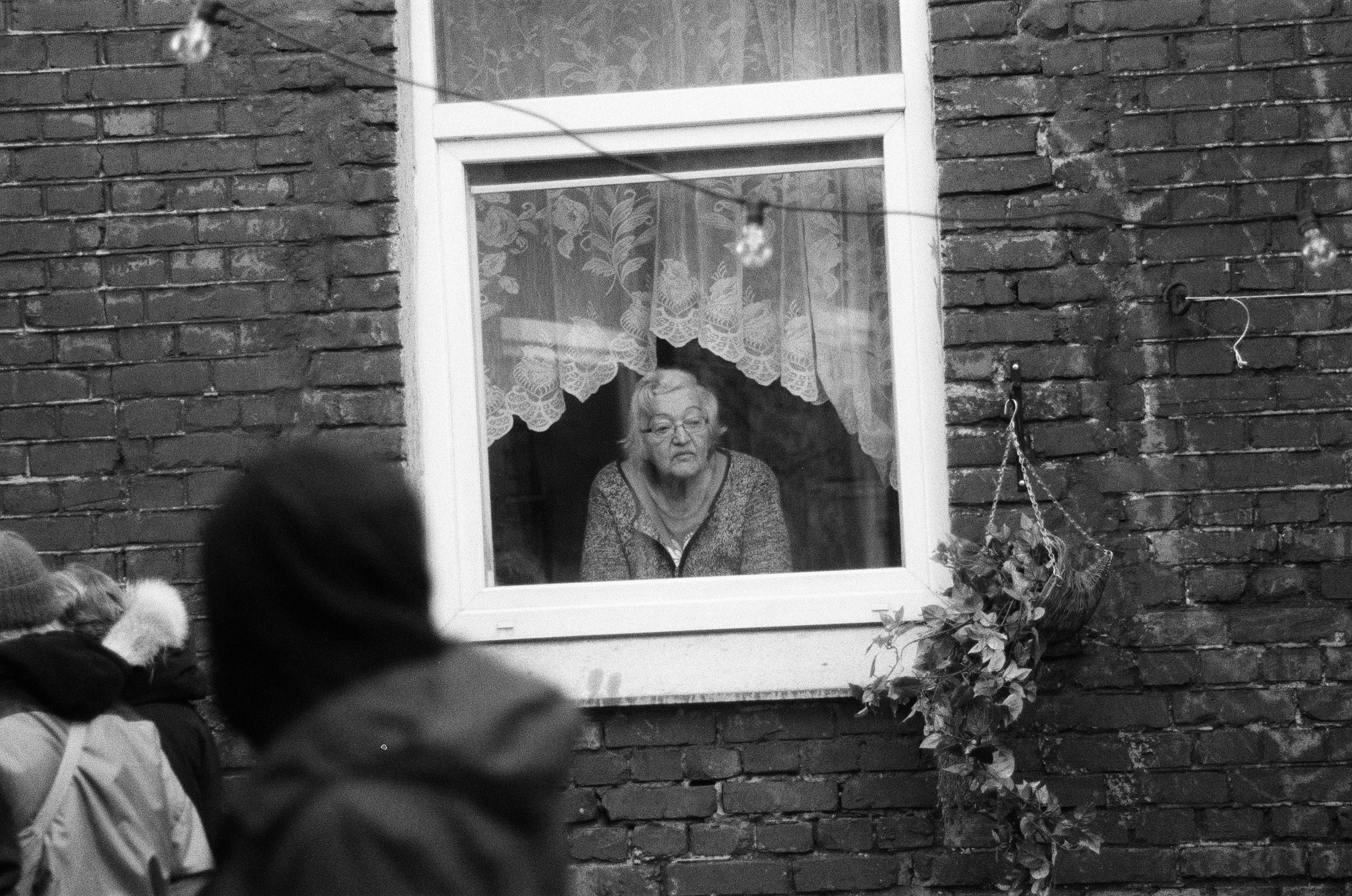
Elder standing beside window

What is Elder Abuse?

By Elder Abuse No Comments

Elder Abuse is when an individual who classifies as an elder is abused by another party causing harm to the elder. Commonly, the offender may be an individual who is close to the elder or whom the elder relies for core support or accommodation. An offender is either a relative (spouses, children, niece/nephew, or often grandchildren), a caregiver, neighbours, etc.

Commonly Elder Abuse may take the form of:

  • Financial Abuse
  • Psychological Abuse
  • Physical Abuse
  • Sexual Abuse
  • Clinical Abuse

The abuse occurs when the abuser imposes their will upon the victim and because of their vulnerability due to age, disability, or fear of retribution, they are forced to comply.[1]

Who is an Elder?

An elder is a person who by reason of a disability he/she has in advanced age, mental or physical impairment or are otherwise “vulnerable”.[2]

Vulnerability

A person may be a “vulnerable elder” if the elder has a physical, mental, psychological, or psychiatric disability to the extent that the person is wholly or partially unable to:

  • Defend themselves against physical, mental, emotional or psychological abuse;
  • Defend themselves against exploitation;
  • Understand the nature and effect of their decisions;
  • Make decisions freely and voluntarily;
  • Communicate decisions;
  • Report abuse;
  • Be reasonably mobile in their freedom of personal movement; or
  • Otherwise be frail in body or mind or have a short life expectancy.

Disability

An elder with disability is a person who experience:[3]

  • Impaired cognitive ability;
  • Dependence upon the offender or an associate of the offender including emotional, financial and psychological dependence;
  • A position of power or authority over the victim by the offender;
  • Social isolation; or
  • Any other matter the Court considers which contributes to the vulnerability of the victim/elder.

Have you Witnessed Elder Abuse?

If you are experiencing or have witnessed Elder Abuse and need help or Non-Legal advice, we suggest you contact the National Elder Abuse phone line – 1800 ELDERHelp (1800 353 374) – which will direct you to the helpline in your state or territory.

If however you think the problem is already at the stage where you need legal help and advice, involving making wills, power of attorney or guardianship documents, or your finances are being handled by someone you no longer trust, or you have similar problems which may require legal action, then please contact us, Elderlaw Legal Services.

Our Elderlaw solicitors are skilled in matters in relation to Elder Abuse and are ready to assist with the legal problems associated with Elder Abuse.


[1] NSW Interagency Protocol for responding to abuse of older people

[2] Taking Action Against Abuse of Older People: Pathways Out of the Maze; a seminar convened by the Education Centre Against Violence [ECAV] and NSW health on 26 June 2013, at Milsons Point, from a paper presented by Rodney Lewis, at p.5

[3] Elder Abuse: How well does the law in Queensland cope? A joint paper of the Office of Public Advocate (Qld) and the Queensland Law Society, June 2010, p.3

Problems with The Aged Care and Other Legislation Amendment (Royal Commission Response) Bill 2022

By Uncategorized No Comments

This Bill was introduced to the House of Representatives on 28 July 2022. The bill offers immunity against civil and criminal claims if the provider complies with the restrictive practices obligations in the quality of care principles:

  • Substituting subordinate legislation [the quality-of-care principles – made as regulations under the aged care act] in place of centuries old common-law such as unlawful imprisonment, battery, and habeas corpus.
  • Overreach of Commonwealth constitutional powers in granting immunity across a range of important criminal and civil law enacted by states and territories e.g. Work health and safety law, writs of habeas corpus, Australian consumer law, common law crime of unlawful restraint, assault & battery.
  • Breach of Australia’s obligations under the ICCPR [international covenant on civil and political rights [and the optional protocol which Australia has signed] as regards the right to liberty [article 9].
  • The bill offers a provider legal immunity only if there is compliance with the quality of care principles – but the last 25 years has been punctuated daily with breaches of the quality of care principles by providers – leading eventually to a royal commission.
  • Schedule 9 of the bill is an act of astounding discrimination against a most vulnerable cohort of Australians whose civil legal rights have been nullified
  • This measure was not a recommendation by the royal commission
  • The offer of immunity to aged care providers most of whom are ‘for profit’ and some of which are publicly listed companies – is unprecedented for what are commercial / consumer businesses
  • The problem of consent has been around since before the enactment of the aged care act 1997 – and has received no attention from providers or from the department.

By Rodney Lewis